
An Expert Guide to Hygiene, Longevity, and Body Safety
Featured Snippet
What is the safest way to clean silicone toys?
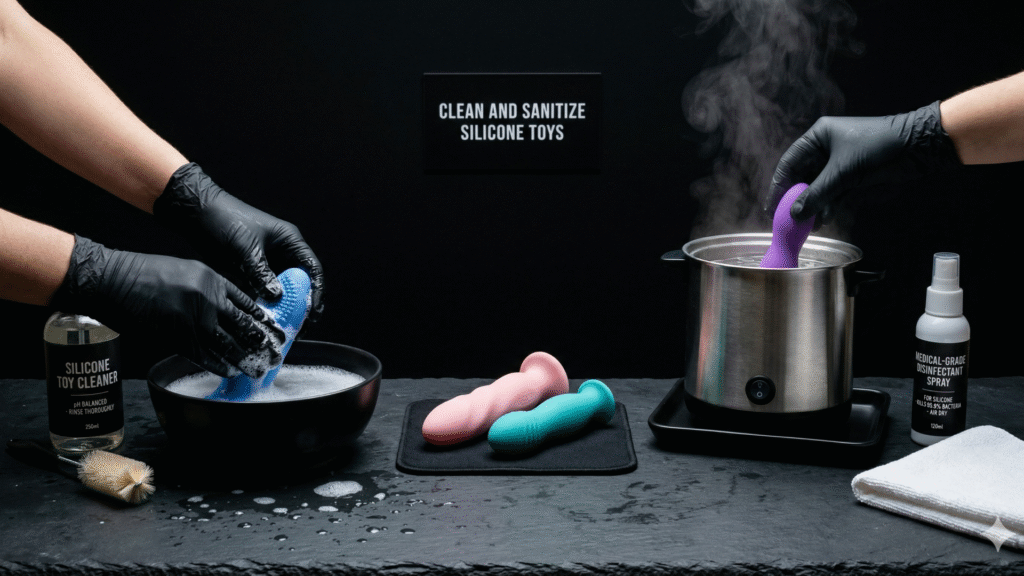
The safest way to clean silicone toys is to wash them immediately after use with warm water and mild, fragrance-free soap, then allow them to air dry completely. For deeper sanitization, non-motorized silicone toys can be boiled for 3–5 minutes or cleaned with a specialized toy-safe disinfectant. Proper drying and storage are essential to prevent bacterial growth and maintain material integrity.
How to Clean Silicone Toys Properly: The Safe, Expert-Backed Guide
Silicone has become the gold standard in intimate products—and for good reason. High-quality silicone is non-porous, body-safe, and durable, making it one of the safest materials for direct skin contact. But here’s the part many people overlook: even the safest material becomes a risk if it’s not cleaned properly.
From real-world user reports to clinical sexual health guidance, improper toy hygiene is one of the most common contributors to irritation, bacterial imbalance, and preventable infections. This isn’t just about cleanliness—it’s about protecting your body over time.
This guide breaks down exactly how to clean, sanitize, and maintain silicone toys the right way—based on practical experience, material science, and expert-backed hygiene standards.
Understanding Silicone Toys: Why Proper Cleaning Matters
What Makes Silicone Different
Silicone stands apart because it is non-porous, meaning it doesn’t trap bacteria internally like lower-grade materials (such as TPE or rubber blends). However, “non-porous” does not mean “self-cleaning.” Bodily fluids, lubricants, and environmental contaminants still remain on the surface after use.
Risks of Improper Cleaning
Failing to clean silicone toys properly can lead to:
- Bacterial buildup and odor retention
- Increased risk of UTIs or vaginal imbalance
- Surface degradation over time (sticky texture, discoloration)
Even premium products require consistent hygiene habits to remain safe.
Step-by-Step Cleaning Process (Real-Use Scenario Included)
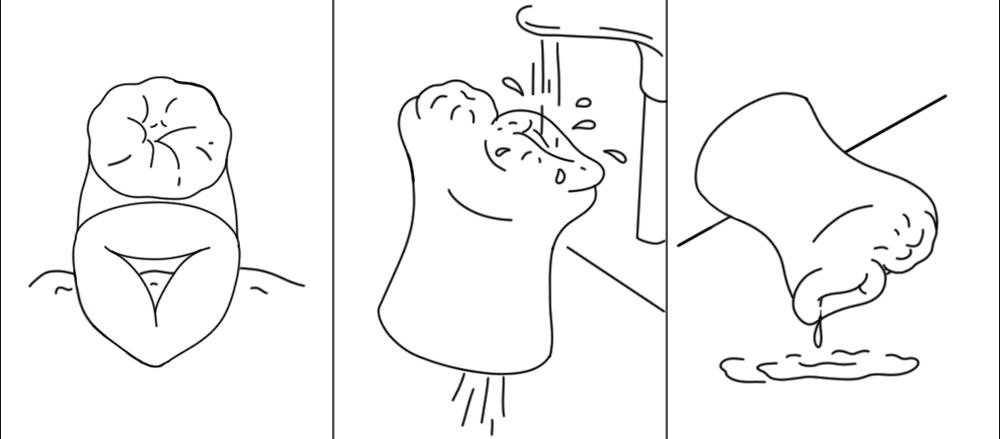
This section focuses on practical, real-world cleaning routines, including one of the most difficult products to clean: realistic molded masturbators (sleeves).
Step 1: Rinse Immediately After Use
Timing matters. Letting fluids dry inside or on the surface makes cleaning significantly harder.
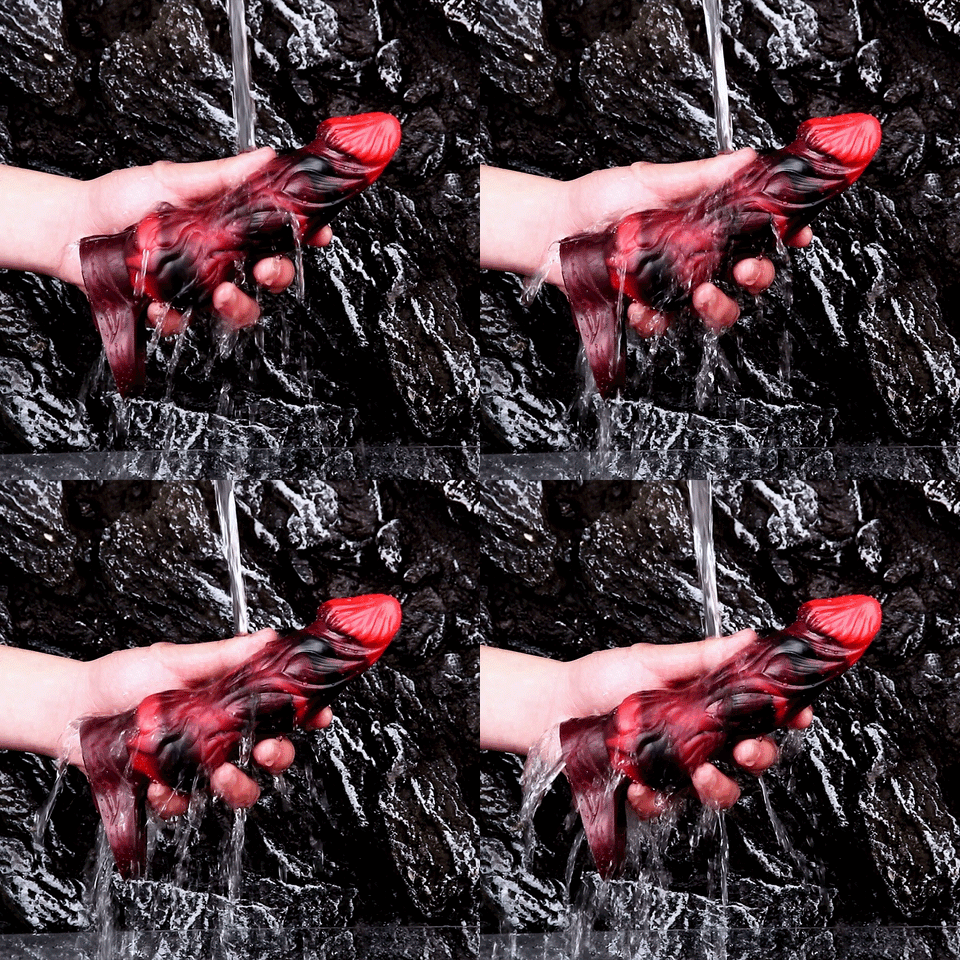
- Use lukewarm water (not hot at first)
- Rinse both exterior and any internal channels thoroughly
Step 2: Apply a Gentle Cleanser
Use a fragrance-free, body-safe soap or a dedicated toy cleaner.
- Avoid harsh detergents or heavily scented products
- Work the cleanser across all surfaces, including textured areas
Step 3: Deep Cleaning a Molded Sleeve (Most Difficult Case)
Realistic silicone sleeves or strokers—especially those with internal tunnels, textures, and suction chambers—are the most challenging to clean properly. Here’s the correct method:
1. Flush the Interior Thoroughly
Run a steady stream of warm water through the canal. If possible, gently expand the opening to allow water to circulate fully.
2. Use Your Fingers (Not Tools)
Apply a small amount of mild soap to your fingers and carefully clean the internal structure. Avoid brushes or rigid tools—they can damage the material.
3. Repeat Rinse Cycles
Rinse multiple times to ensure zero soap residue remains inside. Residual soap can irritate sensitive skin during future use.
4. Focus on Hidden Zones
Pay attention to:
- Deep ridges
- Suction chambers
- Closed-end pockets
These areas trap fluid the easiest—and are where bacteria tend to linger.
Step 4: Optional Deep Sanitization
For non-electronic silicone toys only:
- Boil in water for 3–5 minutes, or
- Use a toy-safe sanitizing spray
This step is especially important after:
- Anal use
- Sharing between partners
- Long periods of storage
Step 5: Drying (Critical but Overlooked)
Improper drying is one of the biggest hygiene mistakes.
- Allow toys to air dry completely
- For sleeves, position them to allow airflow inside (e.g., open-ended drying)
- Avoid sealing or storing while even slightly damp
Moisture = bacterial growth risk.
Sanitization: Going Beyond Basic Cleaning
When Full Sanitization Is Necessary
- After anal use
- Before sharing between partners
- After illness or infection
- When the toy hasn’t been used in a long time
Effective Methods
- Boiling (non-motorized toys only)
- Toy-safe disinfectant sprays
- Controlled alcohol wipe use (occasional, not routine)
What to Avoid
- Bleach or corrosive chemicals
- High-alcohol solutions used frequently
- Household cleaners not designed for body contact
Storage & Maintenance for Long-Term Safety
Proper Storage Conditions
- Store in a cool, dry place
- Use a dedicated storage pouch
- Keep toys separated to prevent material interaction
Avoiding Damage
- Do not store silicone in contact with other materials long-term
- Avoid high heat or direct sunlight exposure
Routine Inspection
Before use, check for:
- Surface cracks or tears
- Persistent odor
- Changes in texture
If any of these appear, replacement is the safer choice.
Body Safety & Hygiene Best Practices
Use Compatible Lubricants
- Stick to water-based lubricants
- Avoid silicone-based lubes unless confirmed compatible
Maintain Personal Hygiene
- Clean your body before and after use
- Wash hands thoroughly
Know When to Replace
Even high-quality silicone isn’t permanent.
Replace your toy if:
- It shows visible damage
- Odor persists after cleaning
- Texture becomes sticky or degraded
Common Mistakes to Avoid
- Rinsing with water only (no cleanser)
- Skipping drying or storing while damp
- Ignoring internal cleaning for sleeves
- Using harsh or inappropriate cleaning products
- Waiting too long after use to clean
These are the exact habits that lead to most hygiene-related issues.
Expert Insights: What Professionals Recommend
Sexual health professionals consistently emphasize one core principle:
Cleaning your toys is not optional—it’s part of safe use.
From a medical standpoint, proper hygiene:
- Reduces infection risk
- Preserves natural bacterial balance
- Extends product lifespan
In other words, cleaning is not just maintenance—it’s prevention.
Conclusion
Silicone toys are designed to be safe, durable, and body-friendly—but only when used responsibly. The difference between a safe experience and a risky one often comes down to what happens after use.
Build a simple habit:
Use → Clean → Dry → Store properly
Do that consistently, and you’re not just protecting your investment—you’re protecting your health.
FAQ
Q1: Can I boil all silicone toys?
A:No. Only boil toys without electronic components.
Q2: Is soap enough for cleaning?
A:Yes, if it’s mild and fragrance-free—but technique matters just as much as the product.
Q3: How do I clean toys with internal tunnels?
A:Flush thoroughly, use your fingers gently, and rinse multiple times to remove all residue.
Q4: Can I use alcohol wipes?
A:Occasionally, yes—but not as a primary cleaning method.
Q5: What’s the safest way to dry a toy?
A:Air drying in a well-ventilated space is the safest and most effective method.
Related Reading
👉The Best Body-Safe Lubricants: Water-Based vs. Silicone-Based→

